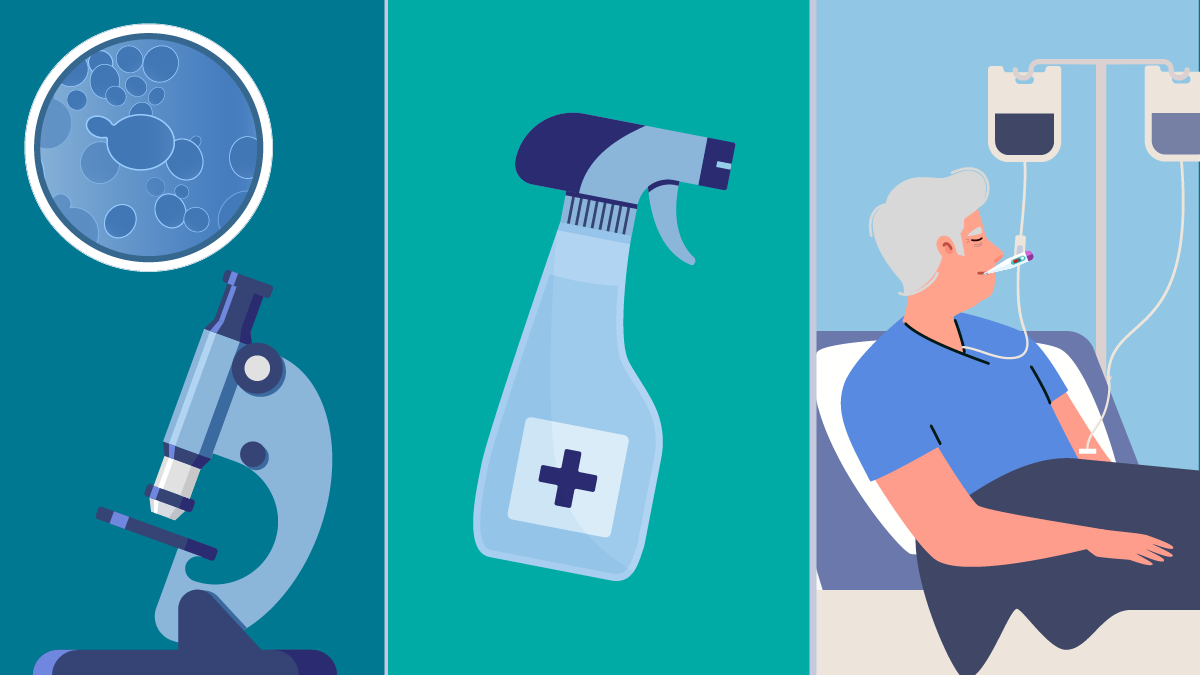
Candida auris: Why This Invisible Fungus is a Global Health Crisis
When most people think of dangerous diseases, bacteria and viruses often come to mind first. Yet, silently, a formidable and often invisible threat has been emerging from the fungal kingdom. Among these deadly fungi, Candida auris stands out as a stark warning and a growing global health crisis. Unlike the dramatic, visible fungi of popular imagination, this microscopic yeast poses a profound challenge, primarily to healthcare systems and vulnerable populations, earning its reputation as one of the most concerning dangerous fungi diseases of our time.
For centuries, the human body's advanced immune system and relatively high core temperature provided a natural defense against most fungal pathogens. While millions of fungal species exist, only a few hundred have historically been capable of causing human illness. These infections often ranged from mild skin conditions to more severe systemic issues, typically affecting individuals already compromised by other illnesses or immunosuppressive treatments. However, the landscape is shifting, and Candida auris is at the forefront of this change, presenting an unprecedented confluence of challenges: mysterious emergence, formidable drug resistance, and a disconcerting resilience in healthcare environments.
What Makes Candida auris Such a Formidable Threat?
The rise of Candida auris is a complex narrative of stealth, adaptation, and alarming persistence. Its characteristics make it a particularly challenging and dangerous fungi disease.
The Silent Emergence: A Fungal Mystery
What makes Candida auris particularly enigmatic is its relatively recent and independent emergence across the globe. Unknown to humanity before 2009, this fungus began appearing in hospitals, with situations worsening dramatically between 2010 and 2012. Intriguingly, it surfaced independently in Venezuela, South Africa, and the Indian subcontinent, followed by subsequent distinct emergences in Iran and Russia. This pattern isn't indicative of typical person-to-person transmission across borders; rather, it suggests multiple, localized origins. As one expert noted, "It came out of nowhere," implying a widespread adaptation event rather than isolated transmission routes. Just last year, scientists in Singapore identified a new variant, or clade, of Candida auris, underscoring its continued evolution. The World Health Organization (WHO) has since labeled Candida auris a "critical pathogen," placing it among the highest priority fungal threats.
Resistance: A Formidable Foe
Perhaps the most concerning aspect of Candida auris is its inherent drug resistance. While many fungal infections are challenging to treat, C. auris often shows resistance to at least two of the three major classes of antifungal drugs currently available. This significantly limits treatment options, making infections prolonged, difficult to clear, and potentially deadly, especially in severely ill patients. The emergence of a dangerous fungi disease with such broad resistance mirrors the crisis of antibiotic-resistant bacteria, creating a dire situation in clinical settings where effective treatments are already scarce.
Hospital Hot Zones
Once Candida auris enters a hospital or healthcare facility, it becomes incredibly difficult to eradicate. This invisible fungus has an unusual ability to attach strongly to various surfaces, including beds, bed railings, medical equipment, and other common touchpoints. Its resilience allows it to persist in the environment for extended periods, making it a constant source of potential transmission. This tenacious adherence, combined with its drug resistance, transforms healthcare facilities into high-risk environments, where outbreaks can be widespread and containment efforts severely challenged. This makes it a particularly insidious and dangerous fungi disease for already vulnerable patient populations.
The Alarming Link to Global Warming
The independent global emergence of Candida auris has led scientists to consider an unsettling hypothesis: its rise may be directly linked to climate change. This connection highlights a critical intersection between environmental health and human susceptibility to dangerous fungi diseases.
Fungi and Temperature: A Historical Barrier
Historically, human body temperature (around 98.6°F or 37°C) has been a crucial defense mechanism against most fungi. Fungi, which have been present on Earth for millions of years, typically thrive in cooler environments. Our internal warmth created an "inhospitable environment," allowing only a select few fungal species to adapt and infect humans. This thermotolerance barrier largely protected us from the vast pathogenic potential of the fungal kingdom, which is otherwise capable of causing devastating diseases in plants, insects, and cold-blooded vertebrates.
Adaptation Under Pressure
However, as global temperatures continue to rise, fungi are facing new evolutionary pressures. To survive in a warmer world, they must adapt to higher temperatures or perish. The prevailing theory suggests that Candida auris may be one of the first fungi to have successfully adapted to hotter temperatures in the environment. This adaptation could have then enabled it to overcome the human thermal barrier, allowing it to infect humans more readily. This scenario represents a profound and concerning shift, potentially opening the door for other environmentally adapted fungi to become human pathogens. The independent emergences across continents, rather than a single source spreading globally, support the idea that environmental pressures are driving this adaptation, making it a critical aspect of understanding this dangerous fungi disease.
Who Is Most at Risk from Candida auris?
While Candida auris represents a significant global health threat, its immediate danger is not uniform across the population.
The Vulnerable Populations
Currently, immunocompetent individuals – those with healthy immune systems – are not thought to be at high risk for serious Candida auris infections. The primary concern lies with individuals who are debilitated or immunosuppressed. This includes:
- Hospitalized Patients: Especially those in intensive care units, with central venous catheters, ventilators, or recent surgeries.
- Long-term Care Facility Residents: Often elderly, with multiple underlying health conditions and frequent exposure to healthcare settings.
- Individuals with Weakened Immune Systems: Patients undergoing chemotherapy, organ transplant recipients, those with autoimmune diseases on immunosuppressive drugs, or individuals with uncontrolled diabetes.
- Patients on Broad-spectrum Antibiotics: These can disrupt the body's natural microbiota, making it easier for fungi to colonize and cause infection.
For these vulnerable groups, an infection with Candida auris can be life-threatening, leading to bloodstream infections, wound infections, and even death, due to limited treatment options and the patients' already compromised health.
The Broader Public Health Implication
Even if you are not immunocompromised, the presence of Candida auris in healthcare settings poses a broader public health risk. Its ability to spread rapidly within hospitals threatens the safety of all patients, potentially overwhelming healthcare resources and reducing the quality of care. Furthermore, its resistance profile means that even if a seemingly healthy individual were to contract it (perhaps from an environmental surface), treatment could be challenging, though less likely to be life-threatening than for a critically ill patient. The societal cost of managing outbreaks, the burden on healthcare workers, and the potential for a more broadly adapted strain in the future underscore why this invisible fungus is a global concern, not just a niche medical problem.
Battling the Invisible Foe: Prevention and Future Outlook
Addressing the threat of Candida auris requires a multifaceted approach, encompassing enhanced surveillance, aggressive infection control, and sustained research efforts.
Current Challenges in Detection and Treatment
One of the insidious aspects of Candida auris is the difficulty in its detection. Standard laboratory methods can sometimes misidentify it as other types of Candida, leading to inappropriate treatment and continued spread. Specialized testing is required for accurate identification. Once identified, the limited arsenal of effective antifungal drugs due to widespread resistance makes treatment a significant challenge. This highlights a critical need for rapid, accurate diagnostic tools and the development of new antifungal agents.
The Critical Need for Global Surveillance and Research
The WHO's classification of Candida auris as a "critical pathogen" is a call to action. It emphasizes the urgent need for global surveillance to track its spread and identify new variants. Investing in research and development for novel antifungal drugs and vaccines is paramount. The fungal kingdom holds immense pathogenic potential that has long been neglected, often referred to as the "forgotten" infectious disease. Understanding the mechanisms behind fungal thermotolerance and drug resistance will be crucial in preventing future emergences of other dangerous fungi diseases.
What Can Individuals Do?
While the primary battle against Candida auris is waged in healthcare settings, public awareness and simple practices can contribute to broader infection control:
- Practice Diligent Hand Hygiene: Frequent and thorough handwashing with soap and water or using alcohol-based hand sanitizer is always critical, especially in healthcare environments.
- Be Informed When Hospitalized: If you or a loved one are in a hospital or long-term care facility, don't hesitate to ask healthcare providers about infection control measures and proper hand hygiene.
- Advocate for Responsible Antimicrobial Use: While C. auris is not typically caused by antibiotic misuse, the broader issue of antimicrobial resistance applies. Supporting responsible prescribing practices helps preserve effective treatments for all infections.
- Understand Personal Risk: If you are immunocompromised or have underlying health conditions, discuss your risks with your healthcare provider and be vigilant about potential symptoms of infection.
Conclusion
Candida auris serves as a potent and visible (though microscopic) reminder that dangerous fungi diseases are an escalating global health crisis. Its mysterious emergence, tenacious drug resistance, and alarming link to environmental changes underscore the urgent need for increased awareness, robust research, and international collaboration. We can no longer afford to neglect the "forgotten" kingdom of fungi. By understanding the threats posed by pathogens like Candida auris and actively working towards better prevention, detection, and treatment strategies, we can hope to mitigate the impact of this invisible foe and safeguard global health against future fungal challenges.